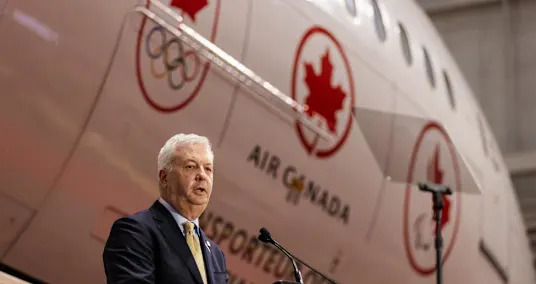

Air Canada CEO Michael Rousseau's step-down and resignation sends a warning message to leaders: communication and empathy skills are core requirements
Toronto Star via Getty ImagesAir Canada CEO Michael Rousseau is reported to be stepping down and retiring following backlash after he delivered a message of condolences, primarily in English, to the casualties of the fatal LaGuardia airport crash involving an Air Canada jet.
The resignation is scheduled to take place by Q3 2026. Air Canada did not immediately respond to a request for comment prior to publication.
While Rousseau might have intended well, his ill-delivered message did not land the way it was planned, with his audience.
Viewers and Ottawa lawmakers were quick to point out that the message, delivered to a bilingual nation of French and English-speaking customers and their families, was about 98% in English, with only two French words being spoken verbally: “merci” and “bonjour.” (The video of the CEO’s statement contained French subtitles but merci and bonjour were the only words uttered verbally.)
For viewers and even lawmakers like Canada’s prime minister Mark Carney, the message spoke greater volumes about lack of adaptability in communication, and therefore, lack of trust in his leadership.
At first glance, this may seem like just a language issue.
But this is more of a stakeholder alignment and communications problem--one that leaders in 2026 and beyond could do well to learn from.
The backdrop of this tragedy:
-
There was the audience/stakeholders (a bilingual country)
-
The situation was one of heightened sensitivity, which called for empathy, representation and inclusion, and emotional intelligence.
-
The failure in this stakeholder communication? A mismatch between the message and the recipients, which led to lawmakers doubting whether Rousseau was fit to continue running the airline, calling for his resignation.
This is critical because communication skills is listed as the number one skill for professionals and aspiring leaders in LinkedIn's 2024 report.
And we’re seeing the exact same thing in skills reports and in surveys and studies of the workforce, such as those from the World Economic Forum's Future of Jobs report.
They all point to the need for stakeholder management and collaboration skills, empathy, and communication. Where leadership communication fails, even for the most experienced leaders, is that it ignores context.
And context is defined by the people you're speaking to.
Context is defined by the people you're speaking to.
Rachel Wells
You may have the best intentions, but if your delivery is not aligned with context, it falls the wrong way.

AI is automating technical tasks, therefore adaptive communication is more critical than ever in the age of AI and remote work, being the ultimate human competitive advantage for leaders
gettyThe Communication Skills Today’s Leaders Need
The climate of 2026 and beyond demands that today's leaders communicate across multiple cultures, time zones, regions.
latest_posts
- 1
 This Week In Space podcast: Episode 186 — Snow on the Moon?
 - 2US bishops officially ban gender-affirming care at Catholic hospitals
- 3Honda’s Biggest Flex Isn’t Its Superbikes, It’s Selling 500K Bikes In One Month
- 4Faulty glucose monitors linked to 7 deaths and more than 700 injuries, FDA warns
- 5Shredded cheese recall: Multiple brands sold at Aldi, Target and Walmart affected over potential metal fragment contamination





- Monetary Wellness: Planning Tips for Independence from the rat race
- Surging measles cases are 'fire alarm' warning that other diseases could be next
- Figure out How to Upgrade Your Gold Speculation Portfolio: Vital Bits of knowledge and Strategies
- Sweet Taste? Candy Fulfills You
- Yoshi mania, Happy Meals and not-so-great reviews: A small talk guide to 'The Super Mario Galaxy Movie'
- A definitive Cruiser Standoff: Decision in favor of Your #1 Ride
- Hezbollah rockets hit 165 UNIFIL positions in Lebanon while targeting Israel, IDF reveals
- 4 Masked Men Steal Renoir, Matisse and Cézanne Paintings Worth Over $10 Million in 3-Minute Heist
- Grass Care Administrations for a Wonderful, Sound Yard